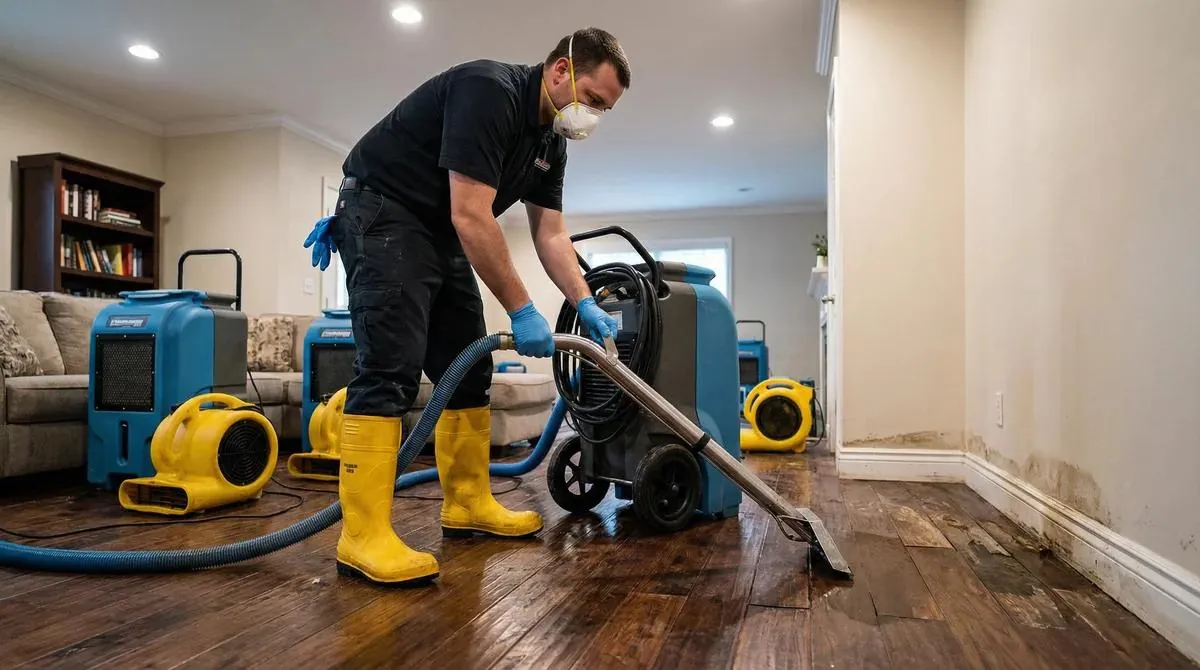
When water is standing on the floor of a home in Aguanga, the clock is already running. The EPA advises drying water-damaged areas and items within 24 to 48 hours to prevent mold growth. Call (833) 640-2369 to reach a local water damage restoration team that can pump out standing water, extract it from carpet and pad and set up drying equipment once the scope is confirmed.
Where the water came from decides how it is handled. The IICRC S500 standard sorts water into three categories. Category 1 is clean water from a supply line or burst pipe. Category 2 is grey water from a washer, dishwasher or toilet overflow without waste. Category 3 is grossly contaminated water such as sewage or outside surface water. Clean water caught early can often be dried in place, while grey and black water usually means removing soaked pad and other porous materials.
Extraction is more than a wet vacuum. Expect powerful extraction units for carpet, pumps for deep water in a garage or laundry room, and moisture meters that show where water has wicked into baseboards and the bottom of drywall. Once the bulk water is gone, air movers and dehumidifiers pull the remaining moisture out of the structure. Ask the team how it will measure that materials are dry before the equipment leaves.
On a rural lot in Aguanga, water from a failed line often reaches more than one room before it is found, especially in a garage, laundry room or a house left empty during the day. Water that spreads under vinyl plank, laminate or carpet keeps wicking into the bottom of the walls, so the drying plan has to cover the walls as well as the floor.
Before the team arrives, close the main water valve, keep clear of outlets and cords near the water, and move rugs and small furniture to a dry room. Photograph and video the water, the source and damaged belongings. The Insurance Information Institute advises taking reasonable steps to protect your property while holding off on major permanent repairs until the adjuster has assessed the damage.
Costs depend on the area, the water category and the materials involved. Fixr's January 2025 figures put water extraction at about $3.75 to $4.25 per square foot for clean water, $4.10 to $6.50 for grey water and $7 to $7.50 for black water. Ask for a written estimate that lists each item, and remember the California Contractors State License Board limit on home improvement down payments: no more than $1,000 or 10 percent of the contract price, whichever is less.
Emergency Water Removal Services We Offer
✓Carpet and Pad Water Extraction
Water pulled from carpet and pad, with pad removed when the water is grey or black or the pad cannot be dried in time.
✓Laminate and Vinyl Plank Water Removal
Water that slips under click-together floors is found with meters and removed before it swells the planks and subfloor.
✓Garage and Laundry Room Pumping
Deeper water from a failed water heater or washer is pumped out so walls and stored items can start drying.
How it works
- 1
Assess the source and category
The team confirms the water is stopped and identifies whether it is clean, grey or contaminated water.
- 2
Extract
Standing water is pumped and extracted from floors, carpet and pad.
- 3
Dry
Air movers and dehumidifiers are placed and moisture readings are recorded.
- 4
Confirm
Readings are repeated until materials reach dry levels, then repairs are scoped.